
2000 Ford Ranger Owners Manual: A Comprehensive Guide
This manual details the 2000 Ford Ranger, covering vehicle identification, safety, operation, maintenance, and troubleshooting. It includes PCM pinout charts and wiring diagrams for optimal performance.
Welcome to the 2000 Ford Ranger ownership experience! This compact pickup truck offered a blend of practicality, affordability, and capability, making it a popular choice for both work and personal use. This owner’s manual serves as a vital resource, providing comprehensive information to ensure safe and enjoyable operation of your vehicle.
The 2000 Ranger came equipped with various engine options, most notably the 2.3L and 4.0L engines, each with unique performance characteristics. Understanding your specific Ranger’s configuration is crucial for proper maintenance and repair. This guide details everything from basic operation procedures to in-depth troubleshooting, covering electrical systems, cooling, steering, and more.
Whether you’re a seasoned mechanic or a first-time vehicle owner, this manual will empower you to confidently maintain and operate your 2000 Ford Ranger, maximizing its lifespan and reliability. Remember to consult this manual regularly for important safety information and maintenance schedules.
Vehicle Identification & Key Information
Locating your 2000 Ford Ranger’s Vehicle Identification Number (VIN) is essential for tracking its history, ordering parts, and verifying warranty coverage. The VIN is typically found on the driver’s side dashboard, visible through the windshield, and on the vehicle’s registration documents and insurance card. It’s a unique 17-character code specific to your truck.
Key information includes the engine code (identifying whether you have the 2.3L or 4.0L engine), transmission type, and axle ratio. These details are crucial when performing maintenance or repairs. Refer to your vehicle’s door jamb sticker for this information. Understanding these specifics ensures you use the correct fluids, filters, and parts.
Keep a record of your Ranger’s key codes for potential key duplication. This manual also outlines important contact information for Ford customer service and parts suppliers, facilitating efficient support when needed.

Understanding Your Ranger’s Specifications
The 2000 Ford Ranger offered several configurations, impacting its specifications. Engine options included a 2.3L inline-four and a 4.0L V6, each with distinct horsepower and torque figures. Transmission choices ranged from a 5-speed manual to a 5-speed automatic. Knowing your specific engine and transmission is vital for maintenance.
Payload capacity varies based on cab type (Regular, SuperCab) and drivetrain (2WD or 4WD). Refer to the vehicle’s door jamb sticker for the exact payload rating. Gross Vehicle Weight Rating (GVWR) defines the maximum permissible weight of the fully loaded vehicle.
Wheelbase and overall dimensions differ between models. Understanding these specifications is crucial for parking, maneuvering, and selecting appropriate accessories. Towing capacity also depends on configuration; consult the owner’s manual for detailed towing guidelines.

Safety Precautions & Features
Your 2000 Ford Ranger is equipped with several safety features, but responsible driving habits are paramount. Always wear seatbelts – they are the primary defense in a collision. The Ranger includes front seat belts and, depending on the cab configuration, rear seat belts as well. Ensure proper fit and usage for all occupants.
Familiarize yourself with the operation of the airbag system. Airbags supplement seatbelts, providing additional protection in certain impacts. Never place rear-facing child seats in front of an active airbag.
Regularly inspect tires for proper inflation and tread depth. Maintain a safe following distance and adhere to posted speed limits. Be aware of your surroundings and avoid distractions while driving. Proper vehicle maintenance contributes significantly to overall safety.
Seat Belts & Restraint Systems
The 2000 Ford Ranger’s seat belts are crucial safety devices, designed to restrain occupants during a collision, minimizing injury. All seating positions are equipped with three-point seat belts. Ensure belts are properly adjusted and lie flat across the chest and pelvis – never across the neck or abdomen.
Inspect seat belts regularly for damage, including fraying, tears, or malfunctioning buckles. Replace damaged belts immediately. Children should be secured in appropriate child restraint systems, based on their age, weight, and height, following all legal requirements.
Never allow passengers to travel in the cargo bed. The Ranger’s restraint systems are designed for occupants seated inside the cab. Proper seat belt usage significantly reduces the risk of severe injury or fatality in the event of an accident.
Airbag System Details
The 2000 Ford Ranger features a supplemental restraint system (SRS), including airbags, designed to work with seat belts, not replace them. The driver and front passenger are protected by airbags that deploy in moderate to severe frontal collisions. Side airbags were not standard equipment on all Ranger models.
A warning light on the instrument panel indicates the SRS status. If the light remains illuminated after starting the engine, it signifies a system malfunction requiring immediate inspection by a qualified technician. Never attempt to repair the SRS yourself.
Improper seating positions, especially for children or individuals with medical conditions, can increase the risk of injury from airbag deployment. Always follow recommended seating guidelines and consult a physician if you have concerns.
Dashboard Symbols & Warning Lights
The 2000 Ford Ranger’s instrument cluster displays various symbols and warning lights to communicate the vehicle’s status. Understanding these indicators is crucial for safe operation. A red light generally indicates a serious issue requiring immediate attention, while amber or green lights often signify normal operation or a system in use.
Key warning lights include the check engine light (indicating an emissions or engine problem), oil pressure warning (signaling low oil pressure), and the battery warning light (suggesting a charging system issue). The brake warning light illuminates if the parking brake is engaged or if there’s a problem with the brake system.
Refer to the dedicated section in this manual for a comprehensive explanation of each symbol and recommended actions when a warning light activates. Ignoring warning lights can lead to more significant damage or safety hazards.
Starting & Operating Procedures
Proper starting and operating procedures are essential for the longevity and performance of your 2000 Ford Ranger. Before starting, ensure the parking brake is engaged, the transmission is in Park (or Neutral for manual transmissions), and all passengers are securely seated with seatbelts fastened.
Insert the key into the ignition and turn it to the “Start” position, releasing once the engine starts. Avoid prolonged cranking. Familiarize yourself with the location and function of all controls, including lights, wipers, and climate controls.
When driving, maintain a safe following distance and adhere to all traffic laws. Regularly check mirrors and be aware of your surroundings. This manual provides detailed instructions on operating various vehicle systems, ensuring a smooth and safe driving experience.
Driving Your 2000 Ford Ranger
Enjoying your 2000 Ford Ranger requires understanding its driving characteristics. This pickup offers a blend of capability and comfort. Be mindful of the vehicle’s size, especially when maneuvering in tight spaces or parking. The Ranger’s suspension is tuned for both on-road and light off-road use, providing a stable ride.
When carrying loads, distribute weight evenly in the bed to maintain optimal handling. Avoid exceeding the vehicle’s specified payload capacity. Pay attention to the dashboard warning lights, which indicate potential issues.
Regularly check tire pressure and tread depth for safe and efficient driving. Familiarize yourself with the Ranger’s braking system and practice smooth, controlled stops. Safe driving habits are paramount for a positive ownership experience.
Maintenance Schedule & Procedures
Maintaining your 2000 Ford Ranger is crucial for longevity and reliability. Follow the recommended maintenance schedule outlined in this manual. Regular fluid checks – engine oil, coolant, brake fluid, power steering fluid, and transmission fluid – are essential. Replacements should occur at specified intervals.
Filter replacements are also vital. Change the air filter, fuel filter, and cabin air filter as recommended to ensure optimal engine performance and air quality. Inspect belts and hoses for wear and tear, replacing them proactively.
Tire rotations and wheel alignments contribute to even tire wear and improved handling. Adhering to this schedule prevents costly repairs and maximizes your Ranger’s lifespan.
Fluid Checks & Replacements
Regularly checking and replacing fluids is paramount for your 2000 Ford Ranger’s health. Begin with the engine oil – inspect the level and condition, replacing it and the oil filter according to the schedule. Coolant levels should be maintained, ensuring the correct antifreeze/water mix. Inspect for leaks!
Brake fluid requires periodic checks for contamination and proper levels; replace as needed. Power steering fluid should also be monitored, and the transmission fluid checked for color and odor, replacing it at the recommended interval.
Proper fluid levels ensure optimal performance and prevent damage. Use only Ford-approved fluids for best results. Ignoring fluid maintenance can lead to expensive repairs.
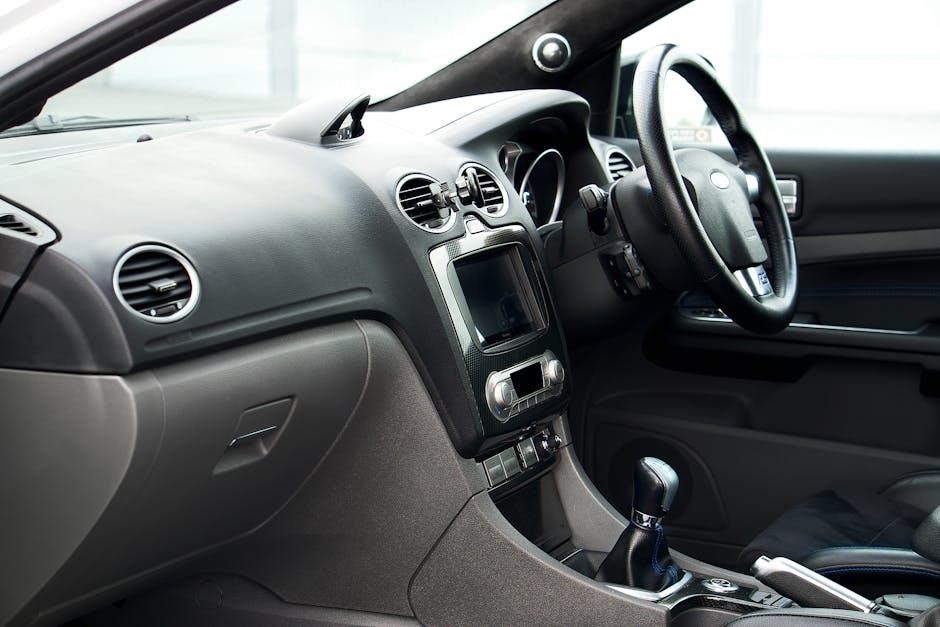
Filter Replacements (Air, Fuel, Cabin)
Maintaining clean filters is crucial for your 2000 Ford Ranger’s efficiency and performance. The engine air filter prevents debris from entering the engine, requiring regular inspection and replacement based on driving conditions – dusty environments necessitate more frequent changes.

The fuel filter safeguards the fuel system from contaminants, ensuring optimal fuel delivery. Replace it according to the maintenance schedule to prevent fuel starvation. Don’t forget the cabin air filter!
A clean cabin air filter provides fresh air inside the vehicle. Replace it annually or as needed to improve air quality and HVAC system performance. Using quality filters extends component life and maintains optimal operation.
Engine Specifications (2.3L & 4.0L)
The 2000 Ford Ranger offered two engine options: a 2.3L Inline-4 and a 4.0L V6. The 2.3L engine produces approximately 145 horsepower and 165 lb-ft of torque, suitable for standard duties and fuel efficiency. It features sequential electronic fuel injection for optimized combustion.
The more powerful 4.0L V6 delivers around 207 horsepower and 260 lb-ft of torque, providing enhanced towing and hauling capabilities. This engine also utilizes sequential electronic fuel injection, contributing to its robust performance.
Both engines are designed for reliability and durability. Understanding these specifications is vital for proper maintenance and selecting the right Ranger for your needs. Consult the vehicle’s emissions sticker for specific details.

Transmission Information & Maintenance
The 2000 Ford Ranger came equipped with either a 5-speed manual or a 4-speed automatic transmission. The manual transmission offers direct control and enhanced fuel economy, while the automatic provides convenience and ease of use.
Regular transmission fluid checks are crucial for longevity. Ford recommends changing the automatic transmission fluid and filter every 30,000 miles under normal driving conditions, or more frequently with heavy use or towing. Use only the specified Mercon V transmission fluid.
For manual transmissions, inspect the shift linkage for smooth operation and check for leaks around the seals. Proper maintenance ensures reliable shifting and prevents costly repairs. Ignoring transmission maintenance can lead to significant damage.
Brake System Overview & Service
The 2000 Ford Ranger utilizes a hydraulic brake system with front disc and rear drum brakes. This system provides reliable stopping power, but requires regular inspection and maintenance to ensure optimal performance and safety.
Brake fluid should be checked periodically for level and contamination. Ford recommends replacing the brake fluid every two years, regardless of mileage, to prevent corrosion and maintain braking efficiency. Use only DOT 3 brake fluid.
Regularly inspect brake pads, rotors, and drums for wear. Worn components should be replaced promptly. Listen for squealing or grinding noises, which indicate potential brake issues. Proper brake maintenance is vital for safe operation.
Electrical System Details
The 2000 Ford Ranger’s electrical system is a 12-volt system powered by a battery and alternator. It controls various functions, including lighting, starting, and accessory operation. Understanding its components is crucial for diagnosis and repair.
Wiring diagrams are essential for troubleshooting electrical issues. Specifically, detailed diagrams exist for the 2.3L engine performance circuits, outlining component connections. These diagrams aid in identifying shorts, opens, and other faults.
The Powertrain Control Module (PCM) manages engine and transmission functions. For the 2.5L engine, a 104-pin connector pinout chart details each pin’s function, assisting with sensor and actuator testing. Always disconnect the battery before working on the electrical system.
Wiring Diagrams (2.3L Engine Performance)
Detailed wiring diagrams are provided for the 2.3L engine’s performance circuits, crucial for diagnosing issues affecting engine operation. These diagrams illustrate the connections between sensors, actuators, and the Powertrain Control Module (PCM). They are invaluable for tracing faults and verifying circuit integrity.
The diagrams cover components like the Mass Air Flow (MAF) sensor, Throttle Position Sensor (TPS), fuel injectors, and ignition system. Each wire’s color and function are clearly labeled, enabling accurate troubleshooting. Understanding these diagrams requires a basic knowledge of electrical circuit theory.
Always refer to the correct diagram for your specific Ranger configuration. Incorrect wiring can cause further damage. Use a multimeter to verify continuity and voltage levels when testing circuits, following the diagram’s guidance.
PCM Pinout Chart (2.5L Engine)
The 1998-2001 2.5L Ford Ranger’s Powertrain Control Module (PCM) utilizes a 104-pin connector, and this chart details each pin’s function. Accurate identification of each pin is vital for diagnostics, repairs, and modifications involving the engine control system. This chart is an essential resource for technicians and enthusiasts.
Pin assignments include power supply, ground, sensor inputs, and actuator outputs. Understanding these functions allows for precise testing and troubleshooting of engine-related problems. The chart specifies which pins correspond to signals from the crankshaft position sensor, camshaft position sensor, and various fuel system components.
Always disconnect the battery before working with the PCM connector. Incorrectly probing or connecting to pins can damage the PCM and other vehicle systems. Refer to the chart alongside wiring diagrams for comprehensive understanding.

Cooling System Maintenance
Maintaining the 2000 Ford Ranger’s cooling system is crucial for preventing overheating and engine damage. Regular inspections and fluid checks are essential. The system comprises the radiator, water pump, thermostat, hoses, and coolant reservoir. Coolant levels should be checked frequently, ensuring the correct mixture of antifreeze and distilled water is used – typically a 50/50 blend.
Flush and replace the coolant every 30,000 miles or two years, whichever comes first. Inspect hoses for cracks, leaks, or swelling, replacing them as needed. The radiator cap should also be tested to ensure it maintains proper pressure. A faulty cap can lead to coolant loss and overheating.
Monitor the temperature gauge while driving; any sudden increases indicate a potential problem. Address any leaks or unusual noises promptly to avoid costly repairs.
Steering & Suspension System
The 2000 Ford Ranger’s steering and suspension systems ensure a comfortable ride and precise handling. Regular inspection is vital for safety and performance. Key components include the steering gear, power steering pump, ball joints, tie rod ends, shocks, and springs. Check the power steering fluid level periodically, topping it off as needed with the specified fluid type.
Inspect shocks and struts for leaks or damage; worn components compromise ride quality and handling. Ball joints and tie rod ends should be checked for play, as excessive wear can lead to steering instability. Regularly rotate tires to promote even wear and extend their lifespan.
Listen for any unusual noises – clunking, squeaking, or grinding – which may indicate a suspension or steering issue requiring attention. Proper alignment is also crucial for optimal tire wear and vehicle control.
Tires & Wheels Information
Maintaining proper tire pressure and condition is crucial for the 2000 Ford Ranger’s safety and performance. Refer to the sticker on the driver’s side doorjamb for recommended tire pressures; these vary based on tire size and vehicle load. Regularly inspect tires for wear, damage (cuts, bulges), and uneven tread patterns.
Rotate tires according to the recommended schedule – typically every 6,000 to 8,000 miles – to ensure even wear and maximize tire life. Check tire tread depth using a tread depth gauge; replace tires when they reach the minimum legal tread depth.
When replacing tires, ensure they match the original equipment size and load rating. Inspect wheels for damage, such as cracks or bends, and repair or replace them as needed. Proper wheel alignment is essential for preventing uneven tire wear and maintaining optimal handling.
Audio System Operation
The 2000 Ford Ranger’s audio system provides entertainment during your travels. Basic operation involves the power/volume knob, tuning knob for radio stations, and buttons for selecting AM/FM, cassette, or CD (if equipped). Familiarize yourself with the location of these controls for safe operation while driving.
Adjust the balance and fader controls to optimize sound distribution within the cabin. The balance adjusts the sound between the left and right speakers, while the fader controls the sound between the front and rear speakers. Utilize the tone controls (bass and treble) to customize the audio to your preference.
If your Ranger has a cassette player, ensure cassettes are clean and properly inserted. For CD players, use only clean, undamaged CDs. Refer to the separate audio system owner’s manual (available for download) for detailed troubleshooting and advanced features.
Troubleshooting Common Issues
This section addresses frequent problems encountered with the 2000 Ford Ranger. A common issue is a no-start condition, often due to a weak battery, faulty starter, or ignition switch. Check battery connections and voltage first. Another frequent concern is overheating; inspect coolant levels and the radiator for leaks or blockages.
Electrical problems, like non-functioning lights, can often be traced to blown fuses. Locate the fuse box (typically under the dash or hood) and consult the fuse diagram. For engine performance issues, check the air filter and fuel filter. A misfiring engine may indicate faulty spark plugs or ignition coils.

Remember to consult a qualified mechanic for complex repairs. This guide provides basic troubleshooting steps, but professional diagnosis and repair are recommended for safety and optimal vehicle performance. Always prioritize safety when attempting any repairs.
Towing Capacity & Guidelines
The 2000 Ford Ranger’s towing capacity varies significantly based on engine, drivetrain, and axle ratio. A 2.3L engine Ranger typically has a lower capacity, around 1,500-2,000 lbs, while the 4.0L engine can tow up to 3,000-6,000 lbs when properly equipped. Always consult your vehicle’s specific doorjamb sticker for the exact rating.
Proper towing requires several considerations. Utilize a weight-distributing hitch for heavier loads to maintain vehicle stability. Ensure the trailer has functioning brakes, and consider a brake controller within the Ranger for optimal stopping power. Regularly inspect trailer lights and connections before each trip.
Exceeding the towing capacity can damage the vehicle’s drivetrain and compromise safety. Distribute the load evenly within the trailer and avoid sudden braking or sharp turns while towing. Adhere to all local towing regulations and speed limits.
Body & Chassis Information
The 2000 Ford Ranger features a body-on-frame construction, utilizing a steel ladder frame for durability and strength. Body panels are primarily steel, susceptible to corrosion in harsh environments; regular washing and protective coatings are recommended. Understanding frame components is crucial for repairs.
Chassis components include the suspension, steering, and braking systems, all integral to vehicle handling and safety. Inspecting the frame for rust or damage during routine maintenance is vital. Pay attention to areas prone to corrosion, such as near mounting points and weld seams.
Repairing body damage requires specialized tools and knowledge. Consult a qualified body shop for significant repairs to ensure structural integrity. Minor dents and scratches can often be addressed with DIY methods, but always prioritize safety and proper technique.
Ford Ranger Pickups: F-350, F-400, F-600
While this manual primarily focuses on the standard 2000 Ford Ranger, it’s important to acknowledge the heavier-duty Ranger pickups available: the F-350, F-400, and F-600 models. These trucks share core components but feature significant upgrades for increased payload and towing capacity.
The F-350 and F-400 typically utilize stronger frames, heavier-duty axles, and upgraded suspension systems. The F-600 represents the largest capacity option, often equipped with a Perkins engine in some configurations. These models cater to commercial and industrial applications.

Service procedures for these heavier-duty Rangers may differ from the standard model. Consult specialized service manuals for detailed instructions regarding these specific trucks. Component interchangeability should be carefully verified before attempting repairs.
Resources for Parts & Repair
Maintaining your 2000 Ford Ranger requires access to reliable parts and repair information. Numerous resources are available to owners, ranging from online retailers to local auto parts stores. Websites specializing in Ford parts often offer competitive pricing and a wide selection of components.
Haynes and Chilton manuals provide detailed repair procedures and diagrams, supplementing this owner’s manual. Online forums dedicated to the Ford Ranger are invaluable for troubleshooting common issues and sharing repair experiences with other owners.
Salvage yards can be a cost-effective source for used parts, but condition should be carefully inspected. Always verify part compatibility before purchasing. Remember to consult qualified mechanics for complex repairs, ensuring safety and proper vehicle functionality.