
Lumbar Fusion Rehab Protocol: A Comprehensive Guide
Recent advancements emphasize integrated, evidence-based pathways, utilizing design thinking across five phases, from empathizing with patient needs to testing implementation.
Rehabilitation, including physical and cognitive behavioral therapy, aims to improve function, addressing both physical and psychosocial aspects post-surgery, with varying techniques.
Formal rehabilitation post-fusion is generally supported, with exercise therapy and multimodal approaches showing effectiveness, though evidence quality remains a consideration for optimal outcomes.
I. Pre-Operative Rehabilitation (Preparing for Surgery)
Prior to lumbar fusion, a focused pre-operative rehabilitation program is crucial for optimizing patient outcomes. This phase centers on building a foundation of strength and flexibility to better withstand the surgical process and expedite recovery. Core strengthening exercises are paramount, preparing the muscles that support the spine for the demands ahead.
Flexibility and range of motion exercises are equally important, aiming to reduce stiffness and improve movement patterns. Crucially, patient education forms a cornerstone of this phase. Individuals must receive comprehensive information regarding post-operative expectations, including potential pain levels, activity restrictions, and the overall rehabilitation timeline.
Understanding these aspects empowers patients to actively participate in their recovery and manage expectations realistically. A well-prepared patient experiences less anxiety and demonstrates improved adherence to the rehabilitation protocol, ultimately contributing to a more successful surgical outcome and a smoother transition through the subsequent phases of recovery.
A. Core Strengthening Exercises
Pre-operative core strengthening is foundational, preparing the trunk muscles for stabilization post-fusion. Initial exercises focus on activating deep core muscles – the transversus abdominis and multifidus – without placing excessive stress on the spine. These include gentle abdominal bracing, drawing the navel towards the spine, and maintaining a neutral pelvic position.
Progressive exercises gradually increase in intensity, incorporating pelvic tilts, bird-dogs (alternating arm and leg extensions), and side planks. The goal isn’t to build bulk, but to enhance endurance and control. Proper form is paramount; patients should be closely monitored to ensure correct technique and prevent compensatory movements.
A strong core provides a stable base for spinal support, reducing strain on the fusion site during early rehabilitation. Consistent performance of these exercises, guided by a physical therapist, maximizes the potential for a successful recovery and improved functional capacity following surgery.
B. Flexibility and Range of Motion
Maintaining flexibility is crucial, even with spinal fusion, to prevent compensatory stiffness in adjacent segments. Pre-operative routines should include gentle stretching of the hamstrings, hip flexors, and lower back muscles. These stretches should be pain-free and performed within a comfortable range, avoiding any movements that exacerbate symptoms.
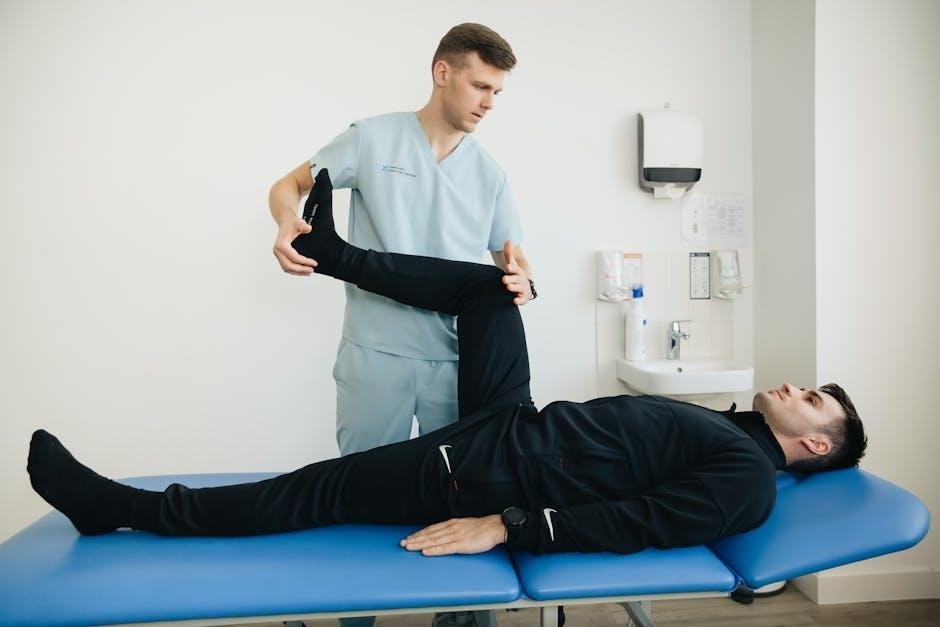
Post-operatively, range of motion exercises are introduced cautiously, starting with passive movements performed by the therapist, then progressing to active-assisted and finally active movements. Emphasis is placed on restoring normal spinal mobility where possible, while respecting the limitations imposed by the fusion.
Gentle trunk rotations and side bends, along with cat-cow stretches, can help improve flexibility. A physical therapist will tailor the program to the individual’s needs, ensuring exercises are appropriate for their stage of recovery and fusion stability.
C. Education on Post-Operative Expectations
Comprehensive patient education is paramount for successful lumbar fusion recovery. Individuals need realistic expectations regarding pain levels, recovery timelines, and functional limitations. Understanding the surgical process, including the fusion’s purpose and potential complications, reduces anxiety and promotes adherence to the rehabilitation plan.
Patients should be informed about wound care, medication management, and signs of infection. Crucially, they must understand the importance of activity modification and avoiding movements that could jeopardize the fusion. Education should also address psychosocial aspects, acknowledging potential emotional challenges during recovery.
Emphasis should be placed on the iterative nature of rehab – progress isn’t always linear. Clear communication with the healthcare team is vital, and patients should be empowered to report any concerns or setbacks promptly. This proactive approach fosters a collaborative recovery journey.

II. Phase 1: Immediate Post-Operative (0-6 Weeks)
Initial focus centers on pain management and wound monitoring, alongside early mobilization through gentle exercises like ankle pumps and log rolling for safe recovery.
A. Pain Management Strategies
Effective pain control is paramount during the immediate post-operative phase (0-6 weeks), significantly influencing a patient’s ability to participate in rehabilitation. A multimodal approach is generally recommended, combining pharmacological interventions with non-pharmacological techniques.
Medications may include prescribed analgesics, potentially including opioids for acute pain, alongside muscle relaxants and anti-inflammatory drugs, carefully managed to minimize side effects. However, reliance on medication should decrease as tolerated.
Non-pharmacological strategies are crucial complements, encompassing techniques like ice or heat application to the surgical site, gentle positioning for comfort, and deep breathing exercises to promote relaxation.
Patient education regarding pain expectations, medication schedules, and the importance of reporting escalating pain is vital. Psychosocial support also plays a role, addressing anxiety and fear that can exacerbate pain perception, contributing to improved functional outcomes.
B. Wound Care and Monitoring
Diligent wound care is essential in the immediate post-operative period (0-6 weeks) to prevent infection and promote optimal healing following lumbar fusion surgery. Patients and caregivers receive detailed instructions on proper wound cleaning techniques, typically involving gentle washing with soap and water.
Regular monitoring for signs of infection is critical, including increased redness, swelling, drainage (especially purulent discharge), and elevated temperature. Any concerning symptoms require immediate medical attention.
The surgical incision should be kept clean and dry, and dressings changed according to the surgeon’s specific protocol. Patients are educated on recognizing normal post-operative changes, such as mild bruising or swelling, versus indicators of complications.
Monitoring overall health and reporting any unusual symptoms – beyond the wound itself – is also important, contributing to early detection and management of potential issues, supporting a successful recovery trajectory.
C. Early Mobilization & Bed Exercises
Initiating early mobilization is a cornerstone of Phase 1 rehabilitation (0-6 weeks), aiming to prevent complications like pneumonia and blood clots, while gently restoring movement. Bed exercises are introduced cautiously, focusing on maintaining circulation and muscle activation.

Ankle pumps and quadriceps sets are fundamental, performed frequently throughout the day to enhance blood flow and prevent muscle atrophy. Gentle log rolling, guided by a physical therapist, helps regain controlled movement without stressing the fusion site.
These initial movements are performed within a pain-free range, prioritizing patient comfort and safety. The goal is not to aggressively challenge the spine, but rather to maintain basic function and prepare for more advanced exercises.
Progressive increases in activity are guided by pain levels and surgical stability, ensuring a safe and effective transition towards greater mobility and functional independence.
Ankle Pumps & Quadriceps Sets
Ankle Pumps & Quadriceps Sets
Ankle pumps and quadriceps sets represent foundational exercises within the immediate post-operative phase (0-6 weeks), crucial for maintaining lower extremity circulation and preventing deep vein thrombosis (DVT). Ankle pumps involve repeatedly pointing and flexing the feet at the ankles.
Quadriceps sets focus on tightening the thigh muscles, pressing the back of the knee into the bed, and holding for several seconds. These isometric contractions help activate the quadriceps without placing stress on the lumbar spine.
Both exercises are performed frequently throughout the day – typically every hour while awake – to maximize their benefits. Proper technique is essential; patients should avoid holding their breath during contractions.
These simple movements are a safe and effective way to begin restoring muscle function and promoting overall recovery following lumbar fusion surgery, laying the groundwork for more advanced rehabilitation.
Gentle Log Rolling
Gentle Log Rolling
Gentle log rolling is a fundamental early mobilization technique implemented in the immediate post-operative period (0-6 weeks) following lumbar fusion. This movement involves rotating the entire body as a single unit, keeping the hips and shoulders aligned.
Unlike traditional side-to-side turning, log rolling minimizes stress on the surgical site and promotes safe movement. Patients are instructed to bend their knees and use their arms for support during the roll.
The exercise is performed slowly and cautiously, avoiding any twisting or bending at the waist. It’s crucial to maintain proper body mechanics to prevent complications and ensure a smooth recovery.
Regular log rolling aids in preventing pressure ulcers, improving respiratory function, and enhancing circulation. It’s a vital component of early rehabilitation, preparing the patient for increased mobility.
III. Phase 2: Early Rehabilitation (6-12 Weeks)

This phase focuses on progressive core stabilization, gait training to improve ambulation, and introducing postural exercises for spinal alignment and functional recovery.
A. Core Stabilization Exercises (Progressive)
Initiating core stabilization is paramount during this phase (6-12 weeks), building upon the foundation established in the immediate post-operative period. Exercises begin with gentle activation of the transverse abdominis and multifidus muscles, focusing on maintaining a neutral spine.
Progression involves incorporating exercises like pelvic tilts, abdominal bracing, and bird-dog variations, emphasizing controlled movements and proper form. The goal is to enhance neuromuscular control and endurance of the core musculature without placing excessive stress on the fusion site.
Supervised sessions with a physical therapist are crucial to ensure correct technique and prevent compensatory patterns. As strength improves, exercises are advanced to include side planks, bridges, and dynamic stability challenges.
Patient education regarding proper body mechanics and core engagement during functional activities is also integral to long-term success, promoting independent exercise and preventing re-injury.
B. Gait Training and Ambulation
During the 6-12 week phase, gait training focuses on restoring a normal, pain-free walking pattern. Initial ambulation begins with assistive devices, such as a walker or cane, to provide stability and reduce stress on the lumbar spine. Emphasis is placed on proper posture, step length, and cadence.
Progressive weaning from assistive devices occurs as strength and balance improve, guided by the physical therapist’s assessment. Exercises to address gait deviations, like Trendelenburg gait or antalgic gait, are incorporated.
Varied terrain and surfaces are gradually introduced to challenge stability and adaptability. Patients are educated on energy conservation techniques and appropriate footwear.
Monitoring for compensatory movements and pain is crucial throughout the process. The ultimate goal is to achieve independent ambulation with a normalized gait pattern, enabling participation in daily activities without exacerbating symptoms.
Within the 6-12 week timeframe, postural exercises are initiated to counteract the effects of prolonged inactivity and altered biomechanics following lumbar fusion. These exercises aim to restore optimal spinal alignment and reduce strain on the surgical site.
Initial exercises focus on neutral spine awareness, teaching patients to identify and maintain a position that minimizes stress on the lumbar region. Gentle chin tucks, scapular retractions, and pelvic tilts are introduced.
Progression involves dynamic postural control exercises, such as standing with proper alignment while performing simple arm movements. Core engagement is emphasized throughout all exercises to provide spinal support.
Education on ergonomic principles and body mechanics is provided to promote healthy posture during daily activities. The goal is to integrate postural awareness into functional movements, preventing re-injury and improving long-term spinal health.

IV. Phase 3: Intermediate Rehabilitation (12-24 Weeks)
This phase builds upon core stability, introducing advanced strengthening and functional movements, including lifting techniques and simulated daily activities for improved outcomes.
A. Advanced Core Strengthening
Progressing beyond foundational exercises, this phase focuses on dynamic core control and endurance. Exercises should challenge stability in multiple planes of motion, incorporating rotational and anti-rotational movements. Examples include weighted planks, side planks with hip abduction, and Pallof presses utilizing resistance bands or cables.
The goal is to enhance neuromuscular control and prepare the spine for more demanding functional activities. Integration of core strengthening with limb movements is crucial, simulating real-life scenarios. Consider exercises like bird-dogs with arm/leg extensions, and dead bugs with controlled movements.
Proper form is paramount to avoid compensatory patterns and prevent re-injury. Monitoring for fatigue and maintaining a neutral spine throughout each exercise is essential. Gradual increases in resistance and complexity should be implemented based on individual tolerance and progress, guided by a physical therapist’s assessment.
B. Functional Movement Training
This phase bridges the gap between controlled exercises and real-world activities, focusing on movement patterns used in daily life. Training incorporates lifting, carrying, pushing, pulling, and twisting, mimicking tasks patients perform at home and work.

Simulated Activities of Daily Living (ADLs) are key, including practicing safe techniques for getting in and out of a car, lifting groceries, and climbing stairs. Emphasis is placed on maintaining proper body mechanics and avoiding positions that stress the fused segments.
Progressive overload is applied to these movements, gradually increasing weight, repetitions, or complexity. A physical therapist will analyze movement patterns, identifying and correcting any inefficiencies or compensatory strategies. The ultimate aim is to restore functional independence and confidence in performing everyday tasks safely and efficiently.
Lifting and Carrying Techniques
Lifting and Carrying Techniques
Proper lifting mechanics are paramount post-lumbar fusion, minimizing stress on the surgical site and promoting healing. Patients are instructed to maintain a neutral spine, bending at the hips and knees, not the waist, while keeping the load close to the body.
Carrying techniques emphasize weight distribution, utilizing both arms equally and avoiding twisting motions. The use of assistive devices, such as carts or dollies, is encouraged for heavier loads. Gradual progression is crucial, starting with light objects and increasing weight as tolerated.
Education focuses on recognizing body signals, stopping if pain arises, and modifying techniques as needed. A physical therapist provides individualized guidance, ensuring correct form and preventing re-injury. These skills are vital for long-term functional independence.
Simulated Activities of Daily Living
Simulated Activities of Daily Living
Rehabilitation progresses to simulate real-world tasks, bridging the gap between the clinic and a patient’s everyday life. This includes practicing movements like reaching, bending, and twisting, adapted to individual limitations and pain levels.
Activities are carefully graded, starting with simplified versions and increasing complexity as strength and stability improve. Examples include simulated kitchen tasks, light housework, and mock workplace scenarios, focusing on proper body mechanics.
The goal is to build confidence and functional capacity, enabling patients to safely return to their routines. A therapist provides feedback and modifications, ensuring movements are performed correctly and minimizing risk of re-injury. This phase emphasizes practical application of learned skills.

V. Phase 4: Advanced Rehabilitation & Return to Activity (24+ Weeks)
This phase focuses on sport/work-specific training, alongside a long-term maintenance program, and addresses crucial psychosocial factors for sustained success and well-being.
A. Sport-Specific or Work-Specific Training
Transitioning beyond general fitness, this stage tailors rehabilitation to the individual’s demands, whether returning to athletic pursuits or occupational responsibilities. A comprehensive assessment identifies movement patterns and physical requirements specific to their activities.
For athletes, training progressively reintroduces sport-specific drills, focusing on proper biomechanics and minimizing stress on the fused segments. This includes agility work, plyometrics (if appropriate), and gradually increasing intensity.
For work-related rehabilitation, the focus shifts to simulating job tasks. This may involve lifting, carrying, bending, and prolonged standing or sitting, all modified to ensure safety and prevent re-injury. Ergonomic assessments of the workplace are crucial.
Progression is guided by pain levels and functional capacity, with ongoing monitoring to prevent setbacks. The goal is to achieve a return to pre-injury activity levels, or as close as possible, while maintaining spinal stability and minimizing risk.
B. Long-Term Maintenance Program
Sustaining the benefits of rehabilitation requires a commitment to a lifelong maintenance program. This isn’t about returning to a fixed protocol, but rather integrating healthy habits into daily life to protect the spine and prevent future issues.
Core strengthening exercises remain paramount, performed consistently to maintain spinal stability. Flexibility and range of motion exercises should also be continued, adapting as needed based on individual needs and comfort levels.
Regular low-impact activities like walking, swimming, or cycling are encouraged to promote overall fitness and maintain a healthy weight. Proper body mechanics should be employed during all activities, especially lifting.
Periodic check-ins with a physical therapist or healthcare provider are recommended to monitor progress, address any concerns, and adjust the program as necessary. Psychosocial support continues to be valuable for long-term well-being.
C. Psychosocial Considerations & Support
Lumbar fusion significantly impacts a patient’s life, extending beyond physical recovery. Addressing the psychological and emotional aspects is crucial for a successful long-term outcome. Anxiety, depression, and fear of re-injury are common post-surgery.
Support groups offer a valuable platform for sharing experiences and coping strategies with others who understand the challenges. Cognitive behavioral therapy (CBT) can help patients manage pain, address negative thought patterns, and develop effective coping mechanisms.
Maintaining social connections and engaging in enjoyable activities are vital for emotional well-being. Open communication with family and friends about limitations and needs fosters understanding and support.
Healthcare providers should screen for psychosocial distress and provide referrals to mental health professionals when needed. A holistic approach, integrating physical and psychological care, optimizes rehabilitation.